
WELCOME BONUS 300%
UP TO €2000 + 100
FREE SPINS
UP TO €2000 + 100
FREE SPINS
Home → Games
Casino games at Robocat Casino
What doesn't count: bets over 5 EUR
Bets exceeding 5 EUR do not contribute to the wagering requirements for the 300% welcome bonus up to €2,000. This means that if a player places a bet of 10 EUR on a game, only 5 EUR of that bet will be counted towards the turnover. This rule applies across all games where wagering contributions are relevant.
For example, a player aiming to clear the bonus with table games, which typically contribute 10 percent, would need to wager significantly more if larger bet sizes are used. A 5 EUR bet on a table game contributes 0.50 EUR towards the wagering requirement, whereas a 10 EUR bet would still only contribute 0.50 EUR.
This limit is crucial for players to understand when managing their bonus funds, ensuring that their betting strategy aligns with the bonus terms. Failure to adhere to this 5 EUR bet limit may result in bonus funds or winnings being forfeited.
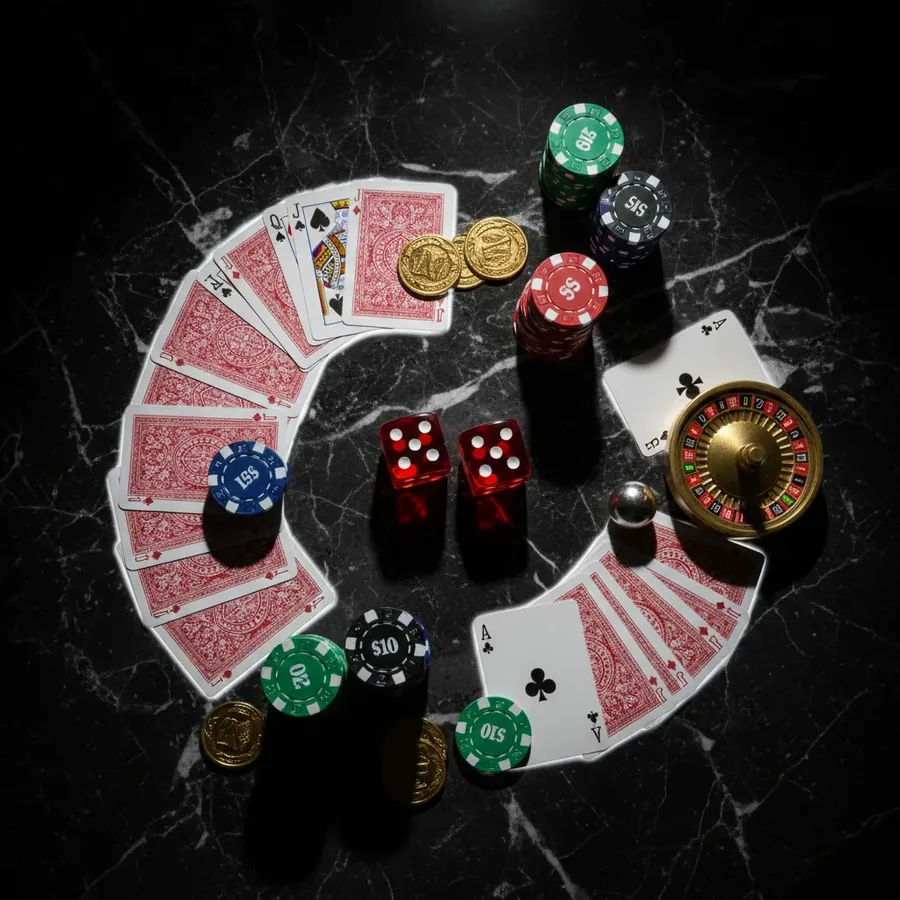
Baccarat commission: 5 percent on each Banker win
In Baccarat, a commission of 5 percent is applied to each winning Banker bet. This commission is a standard house edge adjustment, impacting the overall return to player for this bet type. For instance, a 100 EUR winning Banker bet would result in a 5 EUR commission deduction.
While the Banker bet in Baccarat is often favoured for its slightly lower house edge compared to the Player bet, this commission reduces its theoretical RTP. The Tie bet, for comparison, can have a house edge as high as 14.36% with an 8:1 payout, or 4.84% with a 9:1 payout.
Players should be aware of this 5% deduction when strategizing their Baccarat play. This commission ensures the casino maintains a statistical advantage over the long term, even on the most frequently chosen bet.
Connection Lost in Table Game: Round Continues Automatically
Should a player experience a lost internet connection during a table game session, the round will automatically continue based on the game's default strategy. This feature ensures fairness and uninterrupted gameplay, even in the event of technical disruptions on the player's end. For instance, in Blackjack Surrender with a house edge of -0.08 percent points, the system would automatically process the surrender if that was the optimal move.
In games like American Roulette, with a house edge of 5.26%, the RNG will proceed with the spin and determine the outcome regardless of player input. Similarly, Sic Bo bets with house edges ranging from 7.87% to 18.52% will have their outcomes resolved automatically. This automated continuation is standard practice for maintaining game integrity.
This automatic continuation applies to all table games, including those with complex rulesets like Video Poker Jacks or Better 9/6, which boasts a 99.54% RTP. Players can be assured that their active bets will be resolved according to established game logic, safeguarding their potential winnings or losses.
Table Games Often Count Only 10 Percent
Table games, such as Blackjack Liberal Vegas Strip with a house edge of 0.28%, often contribute only 10 percent towards fulfilling the wagering requirements of bonuses. This means that for every 10 EUR wagered on a table game, only 1 EUR counts towards clearing the bonus. This contrasts with slots, which typically contribute 100 percent.
For example, to meet a wagering requirement of 4,000 EUR, a player betting exclusively on table games would need to place 40,000 EUR in bets. This is calculated as 4,000 EUR divided by the 10% contribution rate. The 300% welcome bonus up to €2,000, therefore, necessitates significant turnover.
This lower contribution rate is a common bonus term designed to balance the casino's risk, as table games often have a lower house edge and higher RTP, such as Video Poker Deuces Wild with a positive EV of -0.76%. Players should factor this into their bonus play strategy.
Push in Blackjack: the bet returns
A 'Push' in Blackjack signifies a tie between the player's hand and the dealer's hand, resulting in the player's original bet being returned. This outcome does not result in a win or a loss for the player. For instance, if both the player and dealer have a total of 20, the bet is pushed.
This rule is a fundamental aspect of Blackjack, including variants like Blackjack 6 Decks with a 99.54% RTP. A push is distinct from losing half a bet, as in Blackjack Surrender, where the player forfeits 50% of their stake. The bet amount remains unchanged in the event of a push.
Understanding the 'Push' outcome is essential for players, particularly when considering the various rule variations in Blackjack. For example, the specific payout for a Blackjack (a total of 21 on the first two cards) is typically 3:2, but a push simply returns the initial wager without any profit.
Game categories at a glance
| Category | Examples | Stakes From | Highlight |
|---|---|---|---|
| Slots | Buffalo Power: Hold and Win, Major Millions, Jammin' Jars | 0,10 EUR | thousands of titles |
| Table games | Roulette, Blackjack, Baccarat | 0,50 EUR | classic rules |
| Live casino | Infinite Blackjack, Mega Fire Blaze Roulette Live | 0,20 EUR | real dealers |
| Jackpot games | Mega Moolah, Divine Fortune, Age of the Gods | 0,20 EUR | progressive pools |
| Instant games | Aviator, Plinko, Mines | 0,10 EUR | fast rounds |
| Video poker | Jacks or Better, Deuces Wild | 0,25 EUR | strategy based |
Declining Insurance: The Most Common Blackjack Mistake
Blackjack Insurance is a side bet offered when the dealer's upcard is an Ace, with payouts typically at 2:1. For a 6-8 deck game, this side bet carries a substantial house edge of 7.47%, making it a statistically disadvantageous option for players. Even when playing with a single deck, the house edge is approximately 5.88%.
Optimal strategy dictates that players should always decline Blackjack Insurance, unless they are card counting and the true count is +3 or higher. This side bet can be up to 50% of the main bet amount, meaning a player could lose a significant portion of their wager on a statistically unfavorable bet. The RTP for this bet is a mere 92.53%.
For the average player, accepting Blackjack Insurance represents a direct loss of potential funds over time. The house advantage of 7.47% on this specific bet means that for every €100 wagered on insurance, a player can expect to lose €7.47 on average. This is in stark contrast to the main game's RTP of 99.54% with optimal strategy.
Variance at the Table: 1:1 vs. 35:1
The payout structure for different bets in games like Roulette significantly impacts the player's experience through variance. A 'Straight' bet in American Roulette, paying 35:1, offers high potential rewards but also a lower frequency of wins. This contrasts sharply with 'Red/Black' bets which pay 1:1, providing more frequent, smaller wins.
The house edge for American Roulette is 5.26%, stemming from its 38 sectors including both 0 and 00. While a 35:1 payout on a €1 bet could yield €35 profit, the odds of hitting that specific number are 1 in 38. This scenario highlights the high variance associated with such bets.
Conversely, a 1:1 payout bet, like betting on Red or Black, offers a much lower variance. While the potential payout is significantly less, the probability of winning is closer to 50%, making it a more stable betting option over many rounds. The standard deviation for Craps Don't Pass, which often involves 1:1 payouts, is 0.99, indicating lower volatility.
Submit documents no older than three months
Players are required to submit documents that are no older than three months for verification purposes. This measure is standard practice to ensure the authenticity of identification and address verification documents provided by the player. It helps to maintain a secure and compliant gaming environment for all participants.
Failure to provide up-to-date documentation may result in delays or issues with account verification and processing of withdrawals. The casino's terms and conditions will specify the exact types of documents required and their validity period. This is a crucial step in the Know Your Customer (KYC) process.
Ensuring that submitted documents are current helps to prevent fraudulent activity and protect player accounts. The casino must adhere to regulatory requirements, and timely submission of recent documentation is a key component of these protocols. This process is designed to safeguard both the player and the operator.
La Partage applies only to even money bets
The La Partage rule, when available, offers a player a partial refund of their stake on even money bets if the outcome is zero. This rule is specifically designed to mitigate the house edge on bets such as Red/Black or Odd/Even in Roulette. It enhances the player's return by reducing the inherent disadvantage.
For instance, in European Roulette, where the house edge is 2.70%, the La Partage rule effectively halves this edge on even money bets. This means that instead of a 2.70% house advantage, the effective house edge on these specific bets becomes approximately 1.35%.
It is important to note that La Partage does not apply to all bets within Roulette. It is exclusively reserved for even money wagers, and not for proposition bets, columns, or dozens. For American Roulette with its 5.26% house edge, La Partage would offer a significant benefit on even money bets.
Casino Hold'em: Ante Payout Up to 100:1
Casino Hold'em offers a significant payout potential on its Ante bet, with a Royal Flush paying a substantial 100:1. This exciting bonus payout structure adds an extra layer of thrill to the game, rewarding players for achieving the highest possible poker hand. The RTP for the Ante bet, excluding the bonus payouts, is 99.18%.
The game involves placing an Ante bet before the cards are dealt. After the flop, players have the option to Call, doubling their Ante, or Fold. The overall risk element associated with the game, considering both Ante and Call bets, leads to a house advantage of 0.82%.
Other Ante payouts include Straight Flush at 20:1 and Four of a Kind at 10:1, with a Straight paying 1:1 and a Flush at 2:1. Achieving a Full House on the Ante bet typically pays 3:1. These varied payouts contribute to the dynamic nature of the game's strategy and potential returns.
How Much Does One Mistake Cost in 100 Hands?
In Blackjack, specific rule variations can significantly impact player outcomes. For instance, the Dealer Hits Soft 17 rule increases the house edge by 0.22 percentage points, moving from an optimal RTP of 99.54% closer to 99.32%. This means over 100 hands, a player could theoretically lose an additional 0.22% of their total wagers due to this single rule.
Conversely, favourable rules like Double After Split (DAS) can improve the Return to Player (RTP) by approximately 0.14 percentage points. If a player consistently encounters liberal rules such as S17 + DAS + Resplit + Late Surrender in Blackjack, the house edge can be as low as 0.28%. This contrasts sharply with less favourable conditions, where the house edge can be substantially higher.
Considering these factors, a single suboptimal rule in a game like Blackjack can translate to tangible financial differences for the player over extended play. For example, the difference between a 0.28% house edge and a 0.46% house edge in Blackjack, assuming a bet of €10 per hand, equates to an additional €0.18 lost per 100 hands for the player under the less favourable conditions.
Straight 35:1 Against the Chance of 1 in 37
In American Roulette, a bet on a single number, known as a Straight bet, offers a payout of 35:1. This bet covers one specific number out of the 38 available sectors on the wheel, which includes numbers 1 through 36, plus a single zero and a double zero. The house edge on this bet is 5.26%.
The probability of hitting a single number in American Roulette is 1 in 38, as there are 38 possible outcomes. Despite the attractive 35:1 payout, the inclusion of the double zero significantly increases the house advantage compared to European Roulette, which only has a single zero and a lower house edge of 2.70%.
For a player making a €1 bet on a straight number and winning, they would receive €35 in winnings plus their original €1 stake back, totaling €36. However, for every 38 such bets placed, on average, 37 would result in a loss of €1, demonstrating the significant house edge despite the high payout ratio.
Columns and Dozens Pay 2:1 in Roulette
Roulette offers various betting options, including bets on columns and dozens, both of which typically pay 2:1. A column bet covers 12 numbers that run vertically on the betting layout, while a dozen bet covers a group of 12 numbers (1-12, 13-24, or 25-36). The probability of winning either bet on an American Roulette wheel is 12 out of 38.
The house edge for these types of bets on an American Roulette wheel remains consistent with the overall house edge of 5.26%. This means that for every €100 wagered on column or dozen bets, a theoretical average of €5.26 is retained by the casino over the long run. This is due to the presence of both the '0' and '00' pockets.
When a player bets €10 on a dozen and wins, they receive €20 in profit along with their original €10 stake, totalling €30. However, losing bets on columns or dozens, which occur approximately 26 times out of 38 spins in American Roulette, result in the loss of the entire €10 stake.
En Prison on Zero Gives Second Chance
The 'En Prison' rule in European Roulette, specifically when applied to even-money bets (like Red/Black, Odd/Even, High/Low) and the ball lands on zero, offers a significant player advantage. If the 'En Prison' rule is active, the player's even-money bet is either 'imprisoned' for the next spin or 'lost half'. This rule is only applicable on European wheels with a single zero.
When the 'En Prison' rule results in the bet being 'imprisoned', the stake remains on the table for the subsequent spin. If the bet wins on the next spin, the original stake is returned to the player, but no winnings are paid. This effectively transforms a 1 in 37 chance of losing into a 1 in 37 chance of getting the stake back, reducing the house edge significantly for these bets.
The alternative 'La Partage' rule, which is more common in French Roulette, directly returns half of the stake when zero hits on an even-money bet. For example, a €10 bet on Red would result in a €5 return to the player if the ball lands on zero under 'La Partage'. This also effectively halves the house edge on these specific bets from 2.70% to 1.35%.
Video Poker: check payout table before betting
Video Poker variants like Jacks or Better have different payout structures that directly influence the Return to Player (RTP). For instance, the '9/6' version, where a Full House pays 9 coins and a Flush pays 6 coins (per coin wagered), offers a high RTP of 99.54% when played with optimal strategy and the maximum bet of 5 coins. This offers a house edge of only 0.46%.
A slightly less favourable '8/5' version of Jacks or Better, which pays 8 coins for a Full House and 5 coins for a Flush, significantly reduces the RTP to 97.29%, increasing the house edge to 2.71%. This difference in payout amounts can mean a substantial disparity in theoretical long-term returns for players choosing between these two versions.
For example, a player wagering €1 per hand on the '9/6' Jacks or Better game, playing optimally, could theoretically expect to retain 99.54% of their wagers over time. In contrast, playing the '8/5' version under identical conditions would mean a theoretical retention of only 97.29%, highlighting the critical importance of consulting the payout table before placing any bets.
Contact
Live - online chat
Banking









Providers












Robocat Casino 2026